
Turing aged 16, c. 1928.
Wikimedia Commons
· Public domain
Alan Mathison Turing
23 June 1912 – 7 June 1954
Maida Vale, London, England
Wilmslow, Cheshire, England
Mathematics · Computer Science · Cryptanalysis · Mathematical Biology
Cambridge · Princeton · Bletchley Park · NPL · Manchester
"We can only see a short distance ahead, but we can see plenty there that needs to be done."
Alan Turing is one of the twentieth century's most consequential thinkers. He laid the theoretical foundations for the modern computer, helped break Nazi Germany's most sophisticated codes during the Second World War, formulated the first rigorous scientific question about machine intelligence, and made foundational contributions to mathematical biology — all before his death at 41. His life was also one of profound injustice: prosecuted by the British state for his homosexuality, he died in circumstances that remain contested, and was not formally pardoned until six decades after his death.
1. Early Life and Education
Alan Mathison Turing was born on 23 June 1912 at Warrington Lodge, Warrington Crescent, Maida Vale, London. His father, Julius Mathison Turing, was a member of the Indian Civil Service, and his mother, Ethel Sara Stoney, was the daughter of the chief engineer of the Madras Railways. The couple lived much of the year in India, and the young Alan and his elder brother John were largely raised by foster parents in England — a separation from his parents that persisted throughout much of his childhood and which he reportedly found difficult.
From early childhood Turing exhibited an unusual aptitude for numbers and puzzles. At St Michael's Day School in St Leonards-on-Sea, his headmistress immediately recognised his gifts. At Hazelhurst Preparatory School he continued to show exceptional mathematical intuition, often solving problems by methods his teachers had not taught him.
In 1926 he enrolled at Sherborne School in Dorset, a traditional English public school. The opening day of his first term coincided with the British General Strike of 1926. Undeterred, Turing cycled alone from Southampton to Sherborne — roughly 60 miles — staying one night at an inn, in order to attend school. The episode became a minor legend and was reported in the local press.
Sherborne's classical curriculum was not well suited to Turing's scientific mind, and some of his teachers struggled to appreciate him. Nevertheless, it was there that he formed his closest and most formative friendship, with Christopher Morcom, a fellow pupil who shared his passion for science and mathematics. Morcom's sudden death from tuberculosis in February 1930 shattered Turing. He wrote to Morcom's mother for years afterwards, and his grief animated a lifelong preoccupation with questions about the nature of mind and whether it could exist independently of the body.
In 1931 Turing won a scholarship to King's College, Cambridge, where he read mathematics. He graduated in 1934 with a first-class degree and in 1935 was elected a Fellow of King's College on the strength of a dissertation proving a version of the Central Limit Theorem — a result he had derived independently, unaware that it had already been established by others. The election, made purely on scholarly merit, gave him a stable academic home at Cambridge for the rest of his student years and would serve as his base even after he moved to America and then to Manchester.
In 1936 Turing left for Princeton University in New Jersey to study under Alonzo Church, one of the foremost logicians of the age. He completed his doctorate in 1938 with a thesis on ordinal logic and returned to Cambridge in 1938 — and, shortly thereafter, to a secret war-time post that would consume the next six years of his life.
2. The Universal Turing Machine (1936)
Before his doctorate was even finished, Turing had already produced the work that secured his immortality in the history of ideas. In 1936 he published "On Computable Numbers, with an Application to the Entscheidungsproblem" in the Proceedings of the London Mathematical Society. The paper addressed a fundamental question posed by the German mathematician David Hilbert: is there a general mechanical procedure — an algorithm — that can decide, for any given mathematical statement, whether that statement is provable or not?
To answer this, Turing invented what he called an "a-machine" — now universally called the Turing machine. The device is entirely abstract: it consists of an infinite tape divided into cells, a read/write head that can move along the tape one cell at a time, and a finite set of rules that govern what the head does based on what it reads. Despite its simplicity, Turing showed that such a machine could perform any computation that could, in principle, be performed by a human following a fixed set of rules.
More powerfully still, he described a Universal Turing Machine — a single machine that could simulate any other Turing machine by reading a description of that machine from its tape. This concept is the theoretical prototype of the modern general-purpose digital computer: a single physical device programmable to carry out any algorithmic task.
Turing then used this framework to prove that the Entscheidungsproblem has no solution. There are mathematical statements about which no algorithm can ever decide provability — undecidability is an intrinsic feature of formal systems powerful enough to represent arithmetic. His proof closely paralleled, and was published simultaneously with, an equivalent result by Alonzo Church using a different formalism (the lambda calculus). The two results are now united under the Church–Turing thesis: any effectively computable function can be computed by a Turing machine.
The 1936 paper did not simply solve a technical problem in mathematical logic. It defined, for the first time, a precise scientific concept of "computation" and showed that this concept had fundamental limits. Every programming language, every CPU architecture, every line of software ever written exists within the mathematical universe this 24-year-old sketched on paper.
"It is possible to invent a single machine which can be used to compute any computable sequence."
3. Bletchley Park and the Breaking of Enigma
In September 1939, the day after Britain declared war on Germany, Turing reported to the Government Code and Cypher School (GC&CS) at Bletchley Park, a Victorian country house in Buckinghamshire that served as the wartime home of Britain's codebreakers. He was among the first recruits and would remain there, in various capacities, until the end of the war.
The principal target was the German Enigma cipher machine, an electromechanical device that scrambled messages through a series of rotating wheels (rotors). The Wehrmacht and Kriegsmarine used different variants of Enigma, and the number of possible daily settings ran into the hundreds of quadrillions. Polish mathematicians — Marian Rejewski, Jerzy Różycki, and Henryk Zygalski — had broken early versions of the machine before the war and had shared their methods with Britain and France in July 1939. But by 1940 the Germans had increased the complexity of their procedures, and the existing Polish approach, the bomba, could no longer keep pace.
Turing fundamentally redesigned the attack. He recognised that the cribs — predictable phrases that appeared in many German messages, such as weather reports and standardised sign-offs — could be used to constrain the search space dramatically. His machine, the Bombe, was an electromechanical device roughly the size of a wardrobe that tested possible Enigma settings at high speed, eliminating contradictory configurations until a plausible key was found. The first Bombe was installed at Bletchley Park in March 1940; by the end of the war more than 200 were in operation across Britain and the United States.
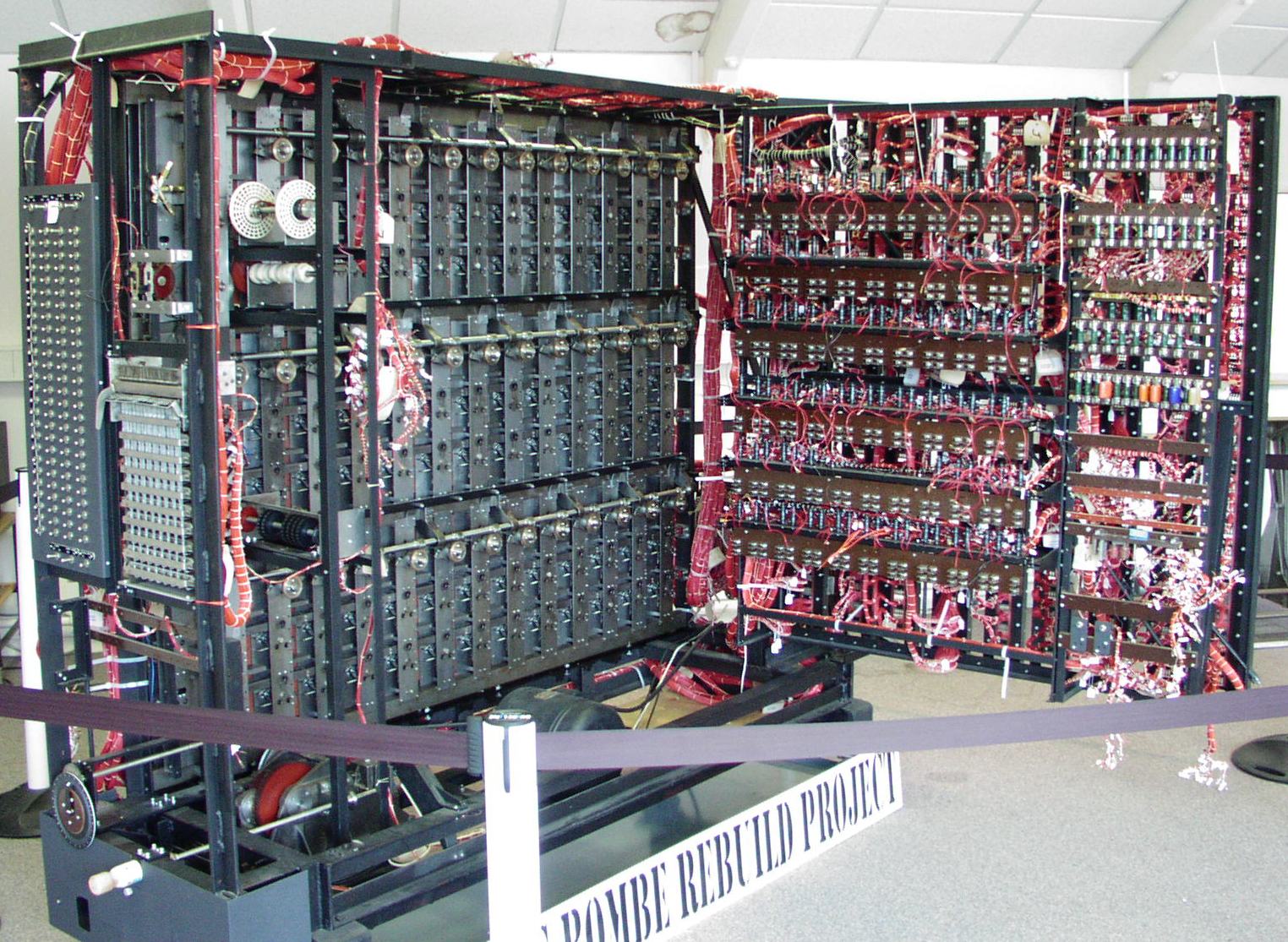
Turing led Hut 8, the section responsible for breaking German naval Enigma — a task of supreme strategic importance because it protected communications between U-boats and their commanders in the Battle of the Atlantic. Naval Enigma used a four-rotor variant that was significantly harder to crack than the three-rotor Army and Air Force versions. In late 1941 Turing co-wrote, with other Hut 8 members, a direct letter to Winston Churchill arguing that the codebreakers were being starved of resources. Churchill's response — scrawled on the letter "Action this day" — resulted in immediate reinforcements.
Turing also developed the statistical technique of Banburismus, which narrowed down the daily settings of naval Enigma before the Bombe had to be used, dramatically reducing the computational burden. He wrote an internal training manual on Enigma, known informally as the "Prof's Book" or Turing's Treatise on the Enigma, which remained classified until 2012.
In late 1942 Turing travelled to the United States, where he spent several months at Bell Labs in New York and at the US Navy's cryptanalytic bureau, OP-20-G, sharing techniques and evaluating American progress on Enigma decryption. He also worked briefly on a speech encryption system called SIGSALY that was used for secure transatlantic telephone conversations between Churchill and Roosevelt.
The intelligence derived from Bletchley Park was known as ULTRA. Historians have estimated — cautiously, given the secrecy that surrounded it for decades — that ULTRA shortened the war in Europe by two to four years and may have saved tens of millions of lives. Turing's personal contribution was central to this effort. General Dwight D. Eisenhower later said that ULTRA was the single most important intelligence asset the Allies possessed.
For his wartime service Turing was appointed an Officer of the Order of the British Empire (OBE) in 1946. He kept the medal in a tin box and reportedly never wore it.
4. Post-War Computing — ACE and Manchester
The war over, Turing joined the National Physical Laboratory (NPL) in Teddington, southwest London, in 1945. His remit was to design a practical electronic computer. His proposal, submitted in 1945, was the Automatic Computing Engine (ACE). It was a remarkably detailed and technically sophisticated design, specifying a stored-program computer — one in which both the program and the data it operates on reside in the same memory — with a clock speed and architecture that, had it been built as written, would have been among the most powerful computers of its era.
Institutional delays at NPL frustrated Turing deeply. A scaled-down prototype, the Pilot ACE, was not completed until 1950, by which point Turing had long since left. He returned to Cambridge in 1947 and spent a year there, during which he wrote "Intelligent Machinery", an internal NPL report that explored whether machines could exhibit behaviour indistinguishable from human thought. The report was not published in his lifetime — NPL's director considered it "too speculative" — but it anticipated in remarkable detail the core questions of artificial intelligence research.
In 1948 Turing was appointed Reader in the Mathematics Department at the University of Manchester and became Deputy Director of the Computing Machine Laboratory there, working alongside Freddie Williams and Tom Kilburn, who were building the Manchester Mark 1. This machine — which performed its first successful program run in June 1948, on the Small-Scale Experimental Machine (the "Baby") — was one of the first stored-program computers to operate anywhere in the world. The full Manchester Mark 1, completed in 1949, and its commercial successor, the Ferranti Mark 1 (the world's first commercially available general-purpose computer, delivered in 1951), drew on Turing's design ideas.
At Manchester, Turing also wrote the first chess program — or more precisely, the first complete algorithm for playing chess, implemented partly by hand simulation in 1952 in collaboration with David Champernowne. The program, called Turochamp, could not run on any computer then in existence but played a recognisable, if weak, game of chess when Turing executed the instructions by hand, taking about 30 minutes per move.
5. Computing Machinery and Intelligence — The Turing Test
In October 1950 the journal Mind published Turing's paper "Computing Machinery and Intelligence," which opens with the deceptively plain sentence: "I propose to consider the question, 'Can machines think?'"
Turing quickly set aside this formulation — he considered the word "think" too philosophically loaded to be useful — and replaced it with what he called the Imitation Game. In the original version, a human interrogator exchanges written messages with two unseen participants: one a man, one a woman. The man tries to deceive the interrogator into thinking he is the woman; the woman tries to help the interrogator identify her correctly. Turing's proposed test substitutes a computer for the man. If a machine can play the imitation game as successfully as a human, Turing argued, we have no scientifically grounded reason to deny that it can think.
The paper then systematically addresses nine objections to machine intelligence that Turing anticipated: the Theological Objection (only God can give souls to humans), the Heads-in-the-Sand Objection (the consequences are too horrible to contemplate), the Mathematical Objection (Gödel's incompleteness theorems show machines have limits), the Argument from Consciousness, the Arguments from Various Disabilities, Lady Lovelace's Objection (machines can only do what they are told), the Argument from Continuity in the Nervous System, the Argument from the Informality of Behaviour, and the Argument from Extra-Sensory Perception.
His treatment of each is incisive. Against the Mathematical Objection he points out that humans are equally subject to logical limitations — we simply do not notice them. Against Lady Lovelace's Objection (derived from Ada Lovelace's remark that Babbage's Analytical Engine "can do whatever we know how to order it to perform") he argues that the capacity to surprise its operators does not require a machine to transcend its programming.
The paper concluded with a proposal that still reads as prescient: rather than programming a machine with all adult human knowledge directly, one might instead build a "child machine" and subject it to a process of education — what we would now call machine learning. Turing estimated that a computer with around 109 bits of storage and fifty years of further development might be able to pass his test. The paper became the founding document of artificial intelligence as a discipline, and "the Turing Test" remains, seven decades on, the most widely discussed benchmark for machine intelligence.
"Instead of trying to produce a programme to simulate the adult mind, why not rather try to produce one which simulates the child's?"
6. Morphogenesis and Mathematical Biology
Turing's final major published work was a departure from computing and logic entirely. In 1952, Philosophical Transactions of the Royal Society B published his paper "The Chemical Basis of Morphogenesis," in which he proposed a mathematical explanation for one of biology's central puzzles: how does a uniform collection of cells develop into a structured organism with distinct patterns — stripes, spots, spirals, segments?
Turing's answer was based on reaction-diffusion systems. He hypothesised that two hypothetical chemicals — which he called morphogens — interact within a tissue. One (the activator) promotes the development of a particular cell type; the other (the inhibitor) suppresses it. If the inhibitor diffuses more quickly through the tissue than the activator, the two chemicals interact in ways that produce spontaneous, stable spatial patterns: the spots on a leopard, the stripes on a zebra, the whorls on a fingerprint, the branching patterns of leaves.
The paper was purely mathematical. Turing solved the governing equations and showed that they admitted periodic patterned solutions — Turing patterns — under certain parameter conditions. He did not claim to have identified the specific chemicals involved in any real organism; he was constructing a plausibility argument that chemistry alone, without any guiding intelligence or special "morphogenetic field," could give rise to biological structure.
The biological community was initially slow to recognise the paper's importance. Decades later, the advent of molecular biology provided direct experimental confirmation: researchers have identified reaction-diffusion mechanisms underlying the patterning of fish skin, the spacing of hair follicles, and the development of digits in embryonic limbs. A 2012 paper in Nature Genetics directly confirmed a Turing mechanism operating in the development of the mouse palate. Turing patterns are now a standard framework in developmental biology and mathematical biology more broadly.
7. Private Life
Alan Turing was a homosexual man at a time when homosexual acts between men were a criminal offence in the United Kingdom under the Criminal Law Amendment Act 1885 — the same legislation under which Oscar Wilde had been convicted in 1895. Turing appears to have been largely open about his sexuality in private, at least by the standards of the era. He was not a figure who hid in the shadows.
The most formative relationship of his life was arguably not romantic but intellectual and emotional: his friendship with Christopher Morcom at Sherborne. Morcom, who died of bovine tuberculosis in February 1930, was Turing's first close friend and a source of profound inspiration. Turing's grief was intense and lasting; he wrote to Morcom's mother that he felt Christopher's spirit was near him when he worked, and questions about mind and consciousness — intensified by the loss of someone who had seemed so brilliantly alive — never left him.
As a young man at Cambridge and Princeton, Turing had friendships and relationships that colleagues recalled as being conducted with relatively little concealment, though the danger was ever-present. He is known to have had a relationship with James Atkins, a fellow mathematics student at Cambridge. There is no evidence that Turing experienced unusual guilt or self-loathing about his sexuality; the evidence suggests rather a man who accepted who he was and who resented the law that criminalised it.
Turing was also, by all accounts, eccentric in ways that had nothing to do with his sexuality. He was an enthusiastic long-distance runner — he ran to professional standard, narrowly missing selection for the 1948 British Olympic marathon team — and would sometimes cycle dozens of miles to and from meetings rather than use a car or train. He kept a rather chaotic house. He was known as a devoted keeper of mice and hedgehogs. He was blunt to the point of social inconvenience in professional settings and apparently indifferent to the hierarchies and social niceties that his colleagues navigated more carefully.
In 1941 he had proposed marriage to a colleague at Bletchley Park, Joan Clarke, who accepted. The engagement was brief; Turing told Clarke fairly promptly that he was homosexual, and the engagement was dissolved, though the two remained friends and colleagues for the rest of his life.
8. Prosecution, Chemical Castration, and Death
In January 1952, Turing reported a burglary at his house in Wilmslow, Cheshire, to the Cheshire Constabulary. During the investigation, detectives established that a man named Arnold Murray, a 19-year-old with whom Turing had been having a sexual relationship, had an associate who was responsible for the theft. In the course of his statements to police, Turing openly confirmed his relationship with Murray.
Both men were charged with "gross indecency" under Section 11 of the Criminal Law Amendment Act 1885. Turing did not deny the charges. He pleaded guilty and was convicted at Knutsford Quarter Sessions on 31 March 1952. He was offered a choice between imprisonment and chemical castration — a course of oestrogen injections intended to suppress his sexual drive. He chose the injections, a treatment that lasted twelve months and caused him to grow breast tissue (gynaecomastia) and other side effects. His security clearance was revoked. He was barred from further cryptanalytic work for GCHQ.
What is striking about the documented record of this period is that Turing continued to work with extraordinary productivity. He travelled to Norway and Greece. He corresponded widely with colleagues. He continued his research in mathematical biology and in AI. His letters from the period show a man who was angry at his treatment by the state but who had not been broken by it. To his friend Norman Routledge he wrote, with characteristic dark humour, about the absurdity of a society that would rather imprison a man than acknowledge that he might love another man.
On 8 June 1954, Turing's housekeeper found him dead in his bedroom. He was 41 years old. The coroner's inquest, held the following day, recorded a verdict of suicide by cyanide poisoning. A half-eaten apple was found near his body; though it was never tested for cyanide, it became the iconic image associated with his death.
The circumstances remain disputed. His mother, Ethel Sara Turing, maintained until her death that her son's death was accidental: he was known to conduct chemistry experiments in a makeshift laboratory at home, and she believed he had inhaled cyanide vapour from a solution he was using in an electroplating experiment. The philosopher and Turing biographer Jack Copeland has argued, based on a re-examination of the inquest evidence, that the coroner's verdict was reached with insufficient evidence and that accidental death is at least as plausible as suicide. Others, including Andrew Hodges, whose 1983 biography remains the standard account, consider suicide the more probable explanation, citing the despondency that the treatment and its aftermath would naturally have caused, and the deliberate staging that Turing — who loved fairy stories and had a particular fondness for Snow White — may have intended in the symbolic apple.
Whatever the truth, the British state had subjected one of the most brilliant men of the century to a humiliating and physically harmful "treatment" for the crime of loving another man. His death, at an age when he was still producing fundamental scientific work, represents an incalculable loss.
9. Legacy and Posthumous Recognition
For nearly two decades after his death, Turing's wartime work remained classified under the Official Secrets Act. He could not be publicly credited with the work that had arguably done more to secure the Allied victory than almost any other individual contribution. The first substantive public account of his role at Bletchley Park appeared in F. H. Hinsley's official history of British intelligence in the Second World War, published between 1979 and 1990.
Andrew Hodges' biography Alan Turing: The Enigma, published in 1983, was a turning point in public awareness. It was the first comprehensive account of both the scientific and personal dimensions of Turing's life, and it introduced his story to a wide general audience. The book has never gone out of print.
Recognition of Turing's foundational role in computing had been institutionalised earlier: the Association for Computing Machinery (ACM) established the Turing Award in 1966, the year of ACM's twentieth anniversary. Named in Turing's honour, it is the highest distinction in computer science — widely described as the Nobel Prize of computing. Recipients include nearly every major figure in the field: from Edsger Dijkstra and Donald Knuth to Barbara Liskov, John Hopcroft, and Geoffrey Hinton.
In 1999 Time magazine included Turing in its list of the 100 Most Important People of the Twentieth Century, calling him "the father of computer science and artificial intelligence."
In September 2009, following an online petition signed by more than 30,000 people, British Prime Minister Gordon Brown issued a formal public apology on behalf of the government:
"On behalf of the British government, and all those who live freely thanks to Alan's work I am very proud to say: we're sorry, you deserved so much better."
In December 2013 Queen Elizabeth II granted Turing a posthumous Royal Pardon under the royal prerogative of mercy — a rare distinction. In 2016 the UK government went further, passing what is colloquially known as the "Turing's Law", which provided posthumous statutory pardons to all men who had been convicted of consensual homosexual acts under now-repealed legislation.
In 2019 the Bank of England announced that Turing would appear on the new polymer £50 note, replacing the scientist James Watt and the entrepreneur Matthew Boulton. The note, which entered circulation on 23 June 2021 — Turing's 109th birthday — depicts his 1951 portrait alongside a formula from his morphogenesis paper, a Pilot ACE computer, and the opening line of his 1950 Mind paper. It is the highest-denomination note in UK circulation.
Bletchley Park, now a museum, receives hundreds of thousands of visitors a year. A reconstruction of the Bombe machine operates in the adjacent National Museum of Computing. Turing is commemorated by a bronze statue in Manchester's Sackville Gardens, unveiled in 2001, which depicts him seated and holding an apple; by streets and buildings named after him across Britain and internationally; and by a building at the University of Manchester that bears his name.
In 2021 Manchester Airport was officially renamed Manchester Airport — not after Turing, but many of the surrounding streets, venues, and cultural institutions bear his name as part of a broader civic recognition of his significance to the city.
10. Turing Wire — The Name Behind the Wire

Turing Wire
AI news, research, and markets for practitioners.
Turing Wire is named in honour of Alan Turing. The name captures two ideas simultaneously.
The first is the obvious one: Turing is the intellectual progenitor of every system we cover. The stored-program computer, the theoretical concept of computation, the first scientific framing of machine intelligence — all of these trace back to the papers and designs produced by a single mind in the 1930s, 1940s, and 1950s. When we report on large language models, on benchmark results, on semiconductor supply chains, on whether a new architecture makes machines better at reasoning — we are reporting on the industry that grew from Turing's foundations.
The second is the "wire" — the telegraph-era word for a dispatch, a signal moving fast across a network, the essential intelligence that shapes decisions. Turing Wire is a briefing service: it takes the daily torrent of AI developments and turns it into signal, in the same spirit that the Bombe took the infinite space of possible Enigma settings and turned it into usable intelligence.
The name is also, we hope, a small act of commemoration — a recognition that the field of AI, which generates billions of dollars, occupies the front pages of newspapers, and is reshaping economies and professions, owes its very existence to a man the British state once treated as a criminal for the simple fact of who he loved.
11. In Cinema, Literature, and Popular Culture
Stage and Television
The first major dramatic treatment of Turing's life was Hugh Whitemore's play Breaking the Code, which premiered at the Theatre Royal, Nottingham in 1986 before moving to the West End and Broadway. Derek Jacobi played Turing, a role he reprised in the 1996 BBC television film of the same name. The play draws directly on Andrew Hodges' biography and addressed, for the first time to a mass audience, both Turing's scientific work and his prosecution. Jacobi's portrayal earned him a BAFTA nomination.
Film
The Imitation Game (2014), directed by Morten Tyldum and written by Graham Moore, was the film that brought Turing to the widest modern audience. Benedict Cumberbatch played Turing, Keira Knightley played Joan Clarke. The film was nominated for eight Academy Awards and won one — Best Adapted Screenplay for Graham Moore. It won four BAFTA Awards, including Outstanding British Film. It was, on its release, one of the highest-grossing independent films of the year.
The film has been criticised by historians and by Turing's biographer Andrew Hodges for historical inaccuracies — including a subplot implying that Turing was blackmailed by a Soviet spy and that he argued for suppressing the Bombe's results, neither of which is supported by the historical record. These criticisms are worth noting, and viewers should treat the film as a dramatisation, not a documentary. Nevertheless, the film introduced Turing's name and story to many millions of people who had not previously encountered them, and its emphasis on the injustice of his prosecution helped build the popular momentum behind the 2013 pardon.
Codebreaker (2011), directed by Clare Beavan and Nic Stacey, is a more historically accurate British television documentary-drama. Ed Stoppard played Turing, and the film made extensive use of period material and expert testimony. It is recommended as a complement to the Hodges biography for those seeking a closer approximation of the historical record.
Literature and Biography
- Andrew Hodges, Alan Turing: The Enigma (1983) — The definitive biography, comprehensive and authoritative. The basis for The Imitation Game.
- Neal Stephenson, Cryptonomicon (1999) — Historical novel in which a fictionalised Turing appears as a character during WWII codebreaking operations.
- Dermot Turing, Prof: Alan Turing Decoded (2015) — A biography by Turing's nephew, drawing on family archives and offering a more personal perspective.
- Jack Copeland, Turing: Pioneer of the Information Age (2012) — A shorter, accessible account by the philosopher who has edited much of Turing's unpublished work.
- Robert Harris, Enigma (1995) — A thriller set at Bletchley Park. Turing is not a character but the world he created is the setting. Adapted into a film in 2001.
- Mark Haddon, The Curious Incident of the Dog in the Night-Time (2003) — The narrator, Christopher, names his pet rats after Turing in tribute to his hero.
Visual Art and Monuments
The Alan Turing Memorial in Sackville Gardens, Manchester, is a bronze sculpture depicting Turing seated on a bench, holding an apple, created by sculptor Glyn Hughes and unveiled on 23 June 2001. The inscription on the plinth reads: "Father of computer science, mathematician, logician, wartime codebreaker, victim of prejudice." The memorial was funded entirely by public donation.
Turing has appeared on Royal Mail stamps — including an issue in 2012 commemorating the centenary of his birth — and has been the subject of numerous commemorative editions in other countries. He featured in the BBC's 2002 public poll Great Britons, where he ranked 21st. A 2019 BBC poll on the greatest person of the twentieth century placed him in the top ten.
The Apple Myth
A widely circulated folk belief holds that the logo of Apple Inc. — a rainbow apple with a single bite taken from it — was designed as a tribute to Alan Turing and the apple found near his body. This story is appealing but false. Rob Janoff, who designed the logo in 1977, has confirmed that the bite was included purely to ensure the image was recognisable as an apple and not a cherry or tomato, and that the Turing story played no role in the design. Steve Jobs, when asked about the connection, said that he wished it were true but confirmed it was not. The story continues to circulate regardless.
Music and Opera
The life of Alan Turing has inspired several musical works. The Turing Test, an opera by Julian Wagstaff, was first performed in the United Kingdom. Composer Mikel Rouse wrote the chamber opera Failing Kansas, which engages with questions about machine consciousness in a Turing-adjacent framework. More broadly, Turing has been referenced in songs, albums, and concert programming in the context of both mathematics and LGBTQ+ history.
12. Key Publications
1936
On Computable Numbers, with an Application to the Entscheidungsproblem
Proceedings of the London Mathematical Society, Series 2, Vol. 42, pp. 230–265. Introduces the Turing machine; proves the undecidability of the halting problem and the Entscheidungsproblem.
1938
Systems of Logic Based on Ordinals (PhD thesis, Princeton)
Explores oracle machines and the hierarchy of undecidable problems. Published in Proceedings of the London Mathematical Society in 1939.
1945
Proposed Electronic Calculator (ACE Report)
Internal NPL report proposing the design of the Automatic Computing Engine. Published posthumously in The Collected Works of A.M. Turing (North-Holland, 1992).
1948
Intelligent Machinery
Unpublished NPL report arguing that machines could be made to exhibit intelligent behaviour; anticipates machine learning. Published posthumously in Machine Intelligence 5 (Edinburgh University Press, 1969).
1950
Computing Machinery and Intelligence
Mind, Vol. 59, No. 236, pp. 433–460. Introduces the Imitation Game (Turing Test); the founding document of AI as a scientific discipline.
1952
The Chemical Basis of Morphogenesis
Philosophical Transactions of the Royal Society B, Vol. 237, No. 641, pp. 37–72. Proposes reaction-diffusion systems as the mechanism behind biological pattern formation.
13. References and Sources
[1] Hodges, A. (1983). Alan Turing: The Enigma. Burnett Books / Hutchinson. Revised edition 2012, Princeton University Press.
[2] Turing, A. M. (1936). "On Computable Numbers, with an Application to the Entscheidungsproblem." Proc. London Math. Soc., 2(42), 230–265. doi:10.1112/plms/s2-42.1.230
[3] Turing, A. M. (1950). "Computing Machinery and Intelligence." Mind, 59(236), 433–460. doi:10.1093/mind/LIX.236.433
[4] Turing, A. M. (1952). "The Chemical Basis of Morphogenesis." Phil. Trans. R. Soc. B, 237(641), 37–72. doi:10.1098/rstb.1952.0012
[5] Hinsley, F. H. et al. (1979–1990). British Intelligence in the Second World War, Vols. 1–5. HMSO / Cambridge University Press.
[6] Copeland, B. J. (ed.) (2004). The Essential Turing. Oxford University Press.
[7] Copeland, B. J. (2012). Turing: Pioneer of the Information Age. Oxford University Press.
[8] Copeland, B. J. (2013). "Alan Turing: The codebreaker who saved 'millions of lives'." BBC News, 19 June 2012. bbc.co.uk/news/technology-18419691
[9] National Archives (UK). HW 25/37 — Turing's "Treatise on the Enigma" (Prof's Book), declassified 2012.
[10] Brown, G. (2009, September 10). "Treatment of Alan Turing was 'appalling' — PM." Prime Minister's Office, 10 Downing Street. Available at The National Archives.
[11] The Pardon of Alan Turing Order 2013, Statutory Instrument 2013 No. 2800. UK Parliament.
[12] Bank of England (2019). "Alan Turing to feature on the new £50 note." Press release, 15 July 2019. bankofengland.co.uk
[13] Newman, M. H. A. (1955). "Alan Mathison Turing." Biographical Memoirs of Fellows of the Royal Society, 1, 253–263. Royal Society, London.
[14] Turing, D. (2015). Prof: Alan Turing Decoded. The History Press.
[15] Miura, T. et al. (2006). "Turing's Model for Biological Pattern Formation and the Robustness Problem." Interface Focus, 2(4), 408–416.
[16] Sheth, R. et al. (2012). "Hox Genes Regulate Digit Patterning by Controlling the Wavelength of a Turing-Type Mechanism." Science, 338(6113), 1476–1480. doi:10.1126/science.1226804
[17] Whitemore, H. (1986). Breaking the Code. Amber Lane Press.
[18] Moore, G. (2014). The Imitation Game [screenplay]. Based on Alan Turing: The Enigma by Andrew Hodges.
[19] Janoff, R. (2009). Interview with Creative Bits. Confirms the Apple logo bite has no connection to Alan Turing.
[20] Wikipedia contributors. "Alan Turing." Wikipedia, The Free Encyclopedia. en.wikipedia.org/wiki/Alan_Turing (accessed May 2026).
[21] Wikimedia Commons. File: Alan Turing Aged 16.jpg. Public domain (photograph pre-1956, originator unknown). commons.wikimedia.org
[22] Wikimedia Commons. File: Bombe-rebuild.jpg. Available via Wikimedia Commons under Crown copyright open government licence. commons.wikimedia.org
Image Licences
- Turing portrait (aged 16, c. 1928) — Public domain. Photographer unknown. Source: Wikimedia Commons.
- Bombe reconstruction — Crown copyright, reproduced under open government licence. Source: Wikimedia Commons.
- Turing Wire logo — © Turing Wire. All rights reserved.